
Criminal Cases in Jefferson County Courts
Jefferson County criminal court cases split among several venues. Superior Court hears felonies. State Court hears misdemeanors and traffic cases. Magistrate Court handles warrant applications, first appearances, preliminary hearings, and limited misdemeanor work. Municipal courts retain many city ordinance and traffic matters.
The Jefferson County Clerk of Superior Court administers Superior and State Court files, plus restricted Juvenile Court records. Its public research counter is at 202 East Broad Street in Louisville. A city bench warrant may never enter the county docket, so the issuing municipal clerk remains an essential fallback.
The court file and booking file should not be read as if they were the same record. Police may list an initial charge at arrest, but the prosecutor can alter, add, or decline counts before filing. The Clerk's record is the source for what Jefferson County actually prosecuted and how each filed count ended.
Jefferson County Courts Compared
The shared Clerk does not erase jurisdiction lines. Superior Court holds felony indictments and outcomes. State Court holds misdemeanors and traffic matters. Magistrate Court, reached at 478-625-8834, handles warrants and preliminary stages. Probate Court may hear specified traffic or ordinance matters but is not the felony custodian.
| Venue | Criminal role | Record route |
|---|---|---|
| Superior Court | Felonies and indictments | Clerk counter |
| State Court | Misdemeanors and traffic | Same Clerk |
| Magistrate Court | Warrants and first appearances | 478-625-8834 |
| Municipal court | City ordinance and traffic cases | Issuing city clerk |
How to Search Case Records
No complete anonymous Jefferson County criminal docket portal was found. The reliable route is the Clerk's public counter, backed by phone contact and a focused request. Georgia Judicial Gateway is a directory, not one statewide docket. Use these steps to avoid mistaking an e-filing tool for public case search.
- Call 478-625-7922 or visit 202 East Broad Street and identify the likely court.
- Give the full legal name, case number when known, and filing year or date range.
- Ask whether Superior, State, Magistrate, Juvenile, or a municipal court holds the file.
- Read the docket and count-level outcome before relying on the original booking charge.
- Order the exact charging paper, judgment, sentence, or certified disposition needed.
| Field Label | Type | Required | Notes |
|---|---|---|---|
| Name | Text | Practical without case number | Use full legal name |
| Case number | Text | No | Best discriminator |
| Court | Choice | No | Superior, State, or other venue |
| Filing year | Date range | No | Helps retrieve archived files |
| Document | Text | No | Docket, charge, order, or sentence |
Jefferson County Counter Search
Clerk Anne L. Durden's office expressly permits public research. It is open weekdays from 8:30 a.m. to 5:00 p.m. Bring enough detail to separate similar names. Older or non-digitized files may need retrieval, and staff can help identify the index without choosing which legal paper answers the requester's question.
Jefferson County Clerk of Court
202 East Broad Street, Louisville, GA 30434
P.O. Box 151, Louisville, GA 30434
478-625-7922
Plain copies cost $1 per page. Certified copies cost $2.50 for the first page and $0.50 for each later page. The office accepts Visa or Mastercard credit or debit cards and money orders, but no cash.
Inspection can come before purchase. Note the case number, court, filing date, and document title while reviewing the index. Then request only the pages that answer the question. A certified copy carries the Clerk's authentication; a plain copy is less costly when official certification is not needed.
What the Case File Shows
A Jefferson County criminal case file records the prosecution rather than the arrest alone. Its charging paper may be an accusation or indictment. Later entries may show counsel, motions, pleas, hearings, count-level outcomes, judgment, sentence, probation, fines, costs, restitution, and appeals. No lawful anonymous sample docket was found, so these are fields to request and verify.
| Case Number & Court | Local identifier and the venue responsible for the prosecution. |
|---|---|
| Charging Document | Accusation or indictment, counts, and cited statutes. |
| Docket Entries | Filed motions, orders, events, and document references. |
| Hearing Dates | Scheduled proceedings and judge information where public. |
| Disposition & Judgment | Plea, dismissal, acquittal, nolle prosequi, no bill, or judgment by count. |
| Sentence & Conditions | Custody, probation, fines, costs, restitution, and other terms. |
Jefferson County E-Filing Limits
EZ-Filing accepts criminal e-filings, but that function is not a full public name search. PeachCourt serves civil filing. Start with the Clerk when a case is absent from the Georgia Judicial Gateway.
The official gateway image illustrates its directory role.
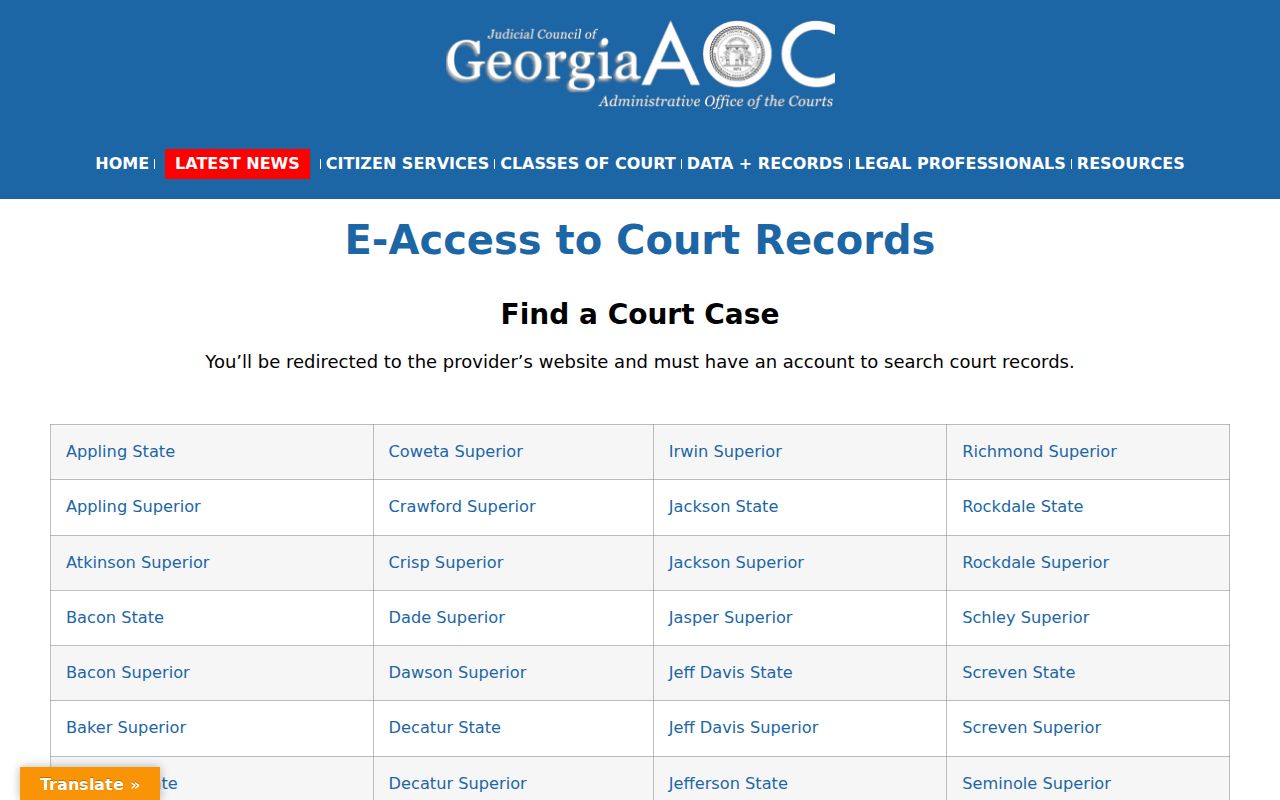
A gateway listing must still be checked against the local docket and final order.
Stages of a Criminal Case
A Jefferson County case may begin with arrest or citation, first appearance, and bond. A prosecutor screens the facts, then may file an accusation or seek an indictment. Arraignment presents the charge and takes a plea. Discovery and motions precede a plea or trial. Judgment, sentencing, appeal, and supervision add later records. No fixed county timetable was published.
Case flow: Charges Filed › Arraignment › Pretrial › Plea or Trial › Disposition › Sentencing
Jefferson Certified Dispositions
A certified disposition can resolve a missing GCIC outcome. Locate the right case and count, then request the final order, judgment, or disposition. Keep the certified copy and follow the GBI correction process if the repository still omits the result.
A booking charge may change after prosecutor review. Dismissal ends prosecution without conviction on that count. Nolle prosequi means the prosecutor chose not to proceed at that time. A no bill means the grand jury declined indictment. Each term answers a different question and should be read at count level.
Do not stop at the case-level status when several counts exist. One count can be dismissed while another produces a plea and sentence. A docket may also show a later appeal or amended order. Ask for the judgment and sentencing paper when the short index label does not show enough detail.
Access & Restrictions
The Georgia Open Records Act presumes reasonable access unless an exemption applies. The Clerk supplies court papers. The arresting agency supplies its own report. A custodian may redact Social Security numbers, financial identifiers, protected victim or minor data, medical material, and security-sensitive facts while releasing the public remainder.
Juvenile and sealed records have separate limits. Record restriction under O.C.G.A. § 35-3-37 limits eligible GCIC dissemination, while court sealing is a related judicial step. Neither means every record was destroyed. Ask whether an absent case is archived, municipal, restricted, sealed, or not yet filed.
Under the Georgia Open Records Act, an office generally has three business days to produce accessible material or explain the timetable and legal basis for withholding. That is a response framework, not a guarantee that an archived file will be copied in three days. Describe the case and requested paper with care.
Jefferson County Court Security
The historic courthouse houses State and Superior Courts, the Clerk, and other offices. Sheriff's court security also covers Juvenile and Magistrate buildings during sessions. The official court security page supplies the image and office description.
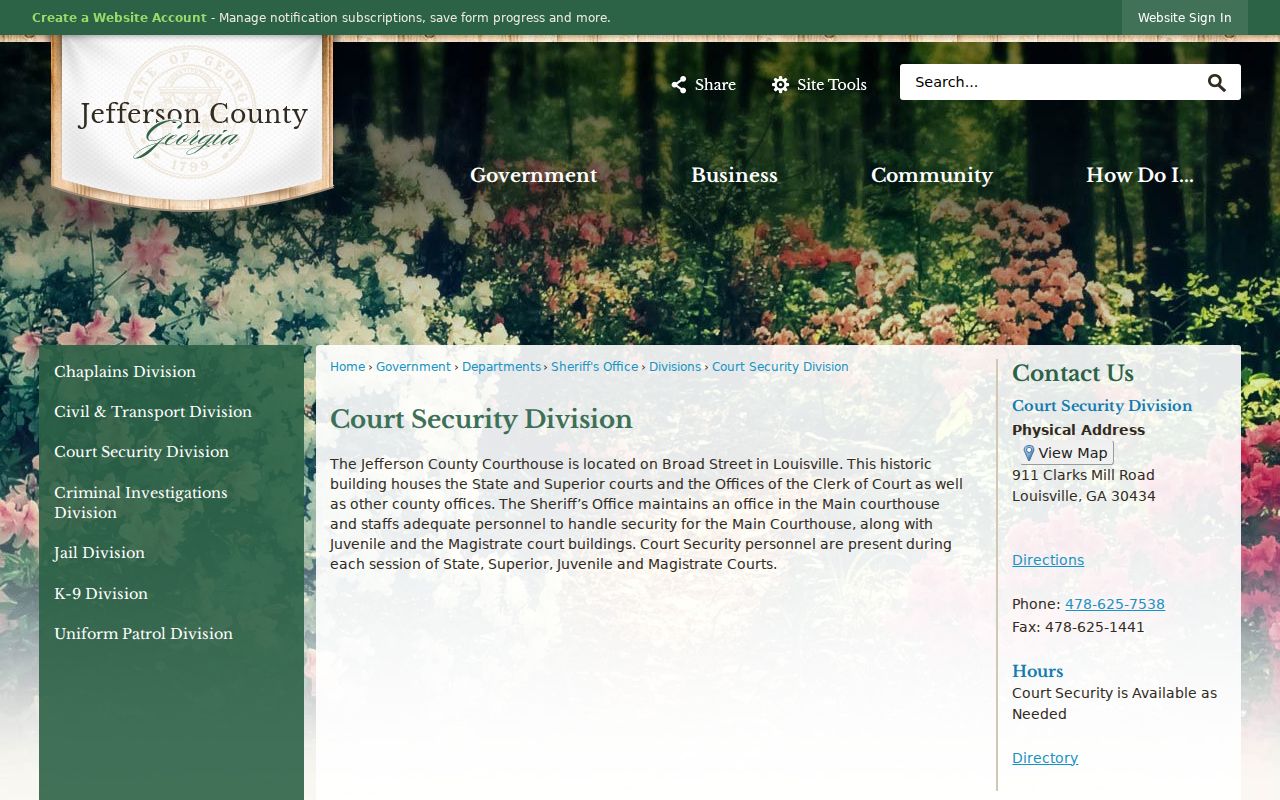
No current official device, locker, transit, or parking rules were found. Call before bringing recording equipment.
Federal Cases Beyond Jefferson County
A federal charge is not filed in Jefferson Superior or State Court. Use PACER for federal dockets, whose official access page appears below.
A federal docket does not replace the county booking jacket or GCIC history.